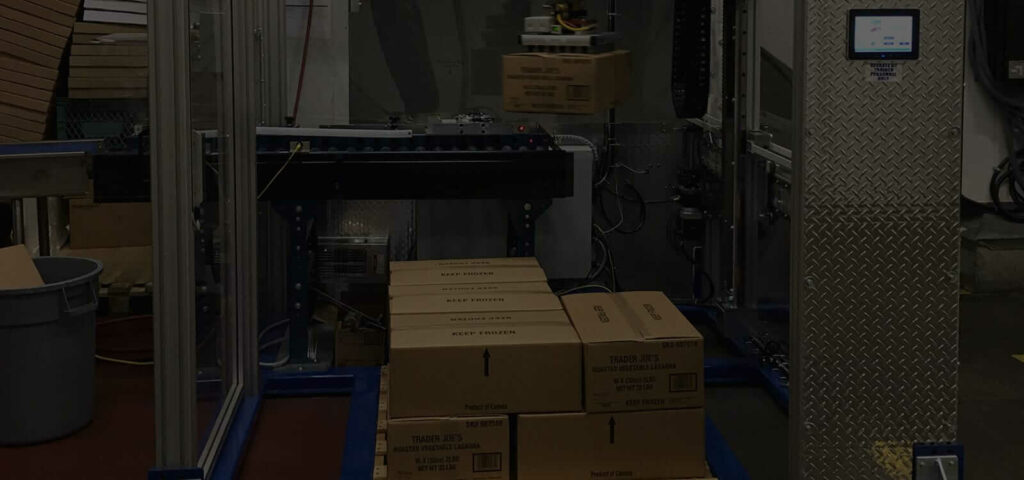
Automation Is No Longer Optional for Modern Manufacturing
Industrial automation trends in 2026 are being shaped by a simple reality: manufacturers need to do more with better systems, smarter workflows, and fewer points of failure.
Automation is no longer reserved for large factories with unlimited budgets. Small and mid-sized manufacturers are also investing in robotics, palletizing systems, connected equipment, and practical AI tools to improve throughput, reduce downtime, and support their teams.
According to the International Federation of Robotics, 542,000 industrial robots were installed worldwide in 2024, more than double the number from 10 years earlier. That growth shows how quickly robotics has moved from future concept to everyday manufacturing tool.
At ROI Industries, the focus is not automation for the sake of automation. The focus is solving real operational problems with equipment that fits the facility, the product, the team, and the workflow.
1. Flexible Automation Is Becoming the Standard
Rigid automation still has its place, but more manufacturers now need systems that can adapt. Product lines change. Packaging changes. Labor availability changes. Floor space is often limited.
That is why flexible automation systems are gaining momentum.
Instead of forcing a facility to work around a machine, flexible systems are designed to support the way production actually runs. This can include mobile palletizers, modular conveyors, adjustable end-of-arm tooling, and compact robotic systems that can be configured around the operation.
ROI Industries’ STACKBOT mobile collaborative palletizer is one example of this shift. It is designed for flexibility, portability, and end-of-line palletizing support where a traditional large robotic cell may not be the best fit.
2. AI Is Moving Into Practical Manufacturing Use
AI is becoming more useful in manufacturing, but the best applications are practical and focused. Manufacturers are using AI to support inspection, predictive maintenance, machine vision, production planning, and robotics.
This does not mean every facility needs a fully autonomous factory. It means manufacturers can use smarter tools to detect problems earlier, improve quality, and make better decisions from real production data.
NIST has highlighted AI development, data generation, and manufacturing robotics evaluation as important areas for the future of robotics. For manufacturers, that points toward systems that are not only automated, but better informed.
3. Robotic Palletizing Continues to Grow
End-of-line automation remains one of the clearest opportunities for improvement. Manual palletizing is repetitive, physically demanding, and difficult to staff consistently.
Robotic palletizing helps manufacturers:
- Reduce repetitive lifting
- Improve stacking consistency
- Support higher throughput
- Reduce labor strain
- Improve workflow at the end of the line
For higher-capacity needs, STACKMAX palletizing systems give manufacturers a configurable option for boxes, bags, trays, pails, and other load types. STACKMAX is designed for operations that need dependable palletizing performance with flexibility built into the system.
4. Workforce Support Is Driving Automation Decisions
The strongest automation strategies support people as much as production numbers.
Manufacturers are using automation to reduce repetitive strain, improve safety, and make physically demanding jobs easier to manage. This is especially important in areas like palletizing, depalletizing, material handling, engine maintenance, and heavy component positioning.
ROI Industries’ POWERSTAND equipment reflects that same thinking. It is built to help teams handle heavy engines and components with better control, safer positioning, and improved access.
The goal is not to remove people from the process. The goal is to give teams better tools so they can work with less strain and more consistency.
5. IIoT and Real-Time Data Are Now Standard
The Industrial Internet of Things (IIoT) and Industry 4.0 have moved from concept to everyday practice. Sensors, controllers, and connected machines now report performance while production runs, so teams can spot problems early, plan maintenance before a failure, and tighten quality control.
Edge devices process that data close to the machine instead of sending everything to a remote server. That speed matters for robotics, machine vision, and inspection, where decisions need to happen in real time. As AI tools become more common on the plant floor, edge computing will handle more of that work.
6. Connected Equipment Requires Smarter Cybersecurity
As factories become more connected, cybersecurity becomes more important. Connected machines, cloud tools, mobile access, sensors, and robotics can improve visibility and uptime, but they also create new responsibilities.
Manufacturers need to think about secure access, software updates, network monitoring, vendor coordination, and operational continuity. Cybersecurity is now part of automation planning, not an afterthought.
This is especially important as more production systems exchange data across departments, vendors, and remote support teams.
7. End-of-Arm Tooling Is Getting More Specialized
Robots only perform as well as the tooling attached to them. As manufacturers automate more product types, custom EOAT solutions are becoming more important.
End-of-arm tooling can determine how well a robot grips, lifts, places, stacks, or transfers a product. The right tooling improves speed, accuracy, and reliability. The wrong tooling can create downtime and inconsistent results.
That is why application-specific design matters. Packaging type, weight, surface, product stability, and production speed all affect the tooling decision.
8. Manufacturers Want ROI, Not Complexity
The best automation solutions do not overcomplicate the operation. They solve the right problem at the right point in the workflow.
In 2026, manufacturers are looking for practical results:
- Less downtime
- Better throughput
- Improved safety
- More consistent output
- Lower dependency on hard-to-staff manual tasks
- Equipment that fits the available space
This is where the conversation should start. Before comparing equipment options, define what the system needs to accomplish.
What Comes Next for Industrial Automation
The next phase of automation will be defined by smarter systems, flexible deployment, and better alignment between people and machines.
Manufacturers will continue investing in robotics, AI-assisted tools, predictive maintenance, robotic palletizing, and connected equipment. However, the winners will not be the companies that buy the most technology. They will be the companies that choose the right technology for their operation.
ROI Industries helps manufacturers evaluate the real need first, then match the right equipment to the workflow.
Explore STACKBOT, STACKMAX, POWERSTAND, and EOAT solutions, or contact ROI Industries to start a system review.
For broader robotics data and industry reporting, visit the International Federation of Robotics. You can also follow ROI Industries on LinkedIn.